
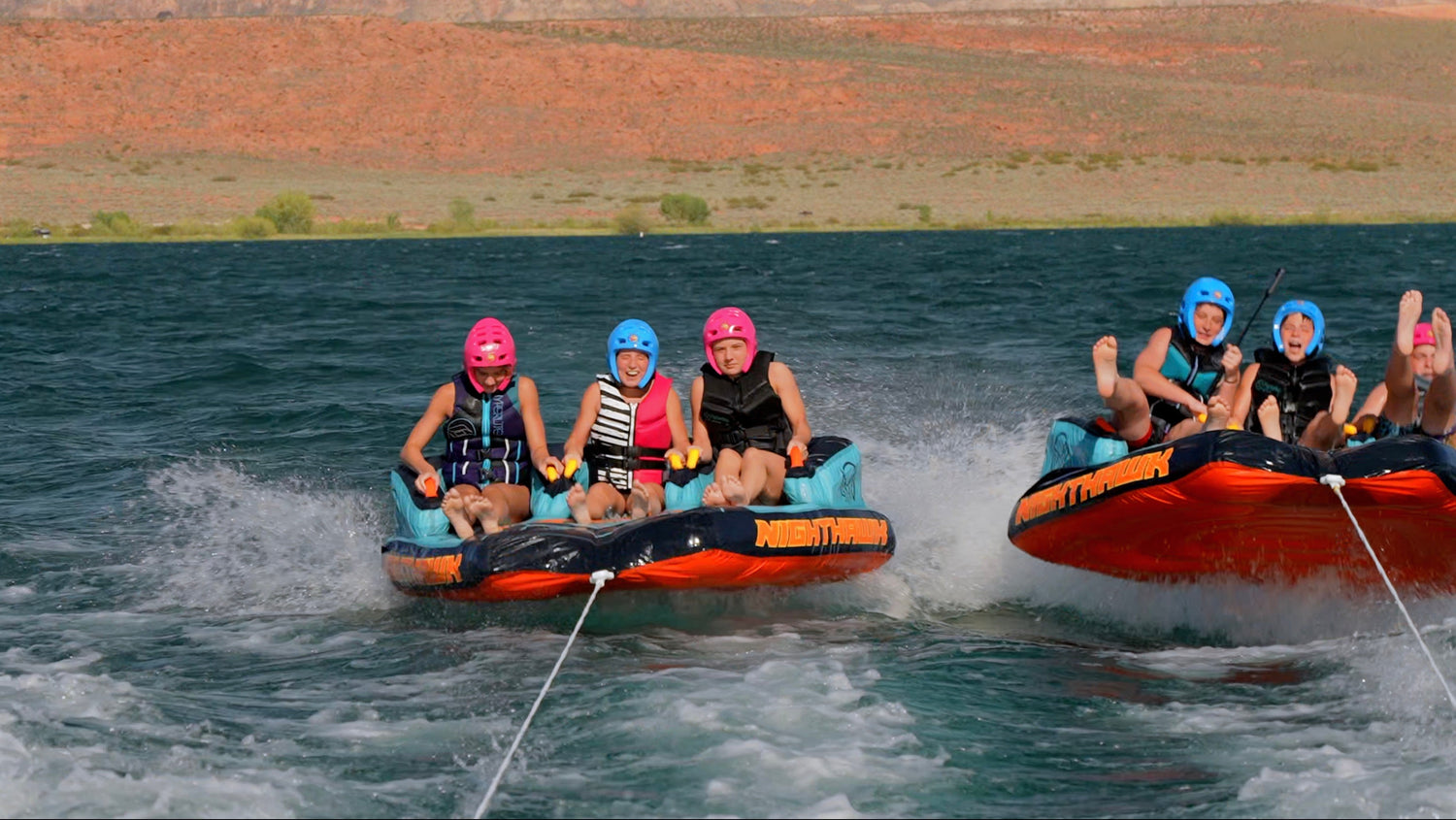
Why You Might Notice Our Helmets at the Lake
If you have ever been tubing behind a boat, you might have seen kids wearing bright, foam-like helmets that look different from traditional wakeboarding helmets.
Many parents immediately wonder:
-
Are these soft helmets safe?
-
Why not just use a hard shell helmet like for wakeboarding?
The short answer: soft foam helmets are actually safer for tubing and multi-rider activities on the water.
Tubing vs Wakeboarding: Why Hard Shell Helmets Don’t Always Work
Wakeboarding helmets are designed for a single rider going fast on a board, usually with some distance from others. They are rigid and protective for single high-impact falls.
But tubing is different:
-
Multiple riders are often on the same tube
-
Riders bounce and collide with each other constantly
-
Falls happen frequently at moderate speeds (15 to 25 mph)
-
Close proximity makes hard collisions more likely
Problem: When two kids wearing hard shell helmets collide, the hard shell can transfer more force to the head, neck, or face instead of absorbing it. This can actually increase the risk of injury in multi-rider situations.
Why Soft Foam Helmets Are Better for Tubing
Soft foam water helmets solve these problems:
-
Impact absorption: Foam spreads the force of collisions across a wider area
-
Rider-to-rider safety: Softer surfaces mean when helmets bump, it is cushioned instead of rigid
-
Lightweight and water-friendly: Foam helmets float and do not weigh kids down
-
Visibility: Bright colors help parents or supervisors spot kids in the water
Soft foam helmets prioritize injury prevention over rigid protection, which is exactly what matters in tubing and multi-rider activities.
What Medical Data and Real-World Experience Show
In tubing and other high-speed multi-rider activities:
-
Head bumps happen frequently, even at moderate speeds
-
ER data on boating and water sports shows concussions and scalp injuries are common with rigid impacts
-
Soft foam helmets reduce the likelihood of severe impact injuries, which is why camps and families are switching to them
Choosing the Right Foam Helmet
When looking for a soft shell water helmet:
-
Make sure it has impact-absorbing foam
-
Look for adjustable straps to keep it secure in the water
-
Ensure it is water-resistant and floats
-
Bright, visible colors make supervision easier
BirdBrain Helmets were designed for tubing and lake activities, combining soft foam protection with a secure fit for kids of all ages.
Conclusion
If you see a soft, foam-like helmet at the lake, it is not just a trendy design. It is engineered for safer tubing and water sports. Unlike traditional hard-shell wakeboarding helmets, soft helmets reduce risk in rider-to-rider collisions and keep kids safer in multi-person tubing activities.
Explore our BirdBrain soft foam water helmets here:
https://birdbrainhelmets.com/products/water-tubing-helmet
0 comments